
Somalia
The Somaliland Secession Crisis and Its Impact on the Arab Nation
About this Document
Document Content
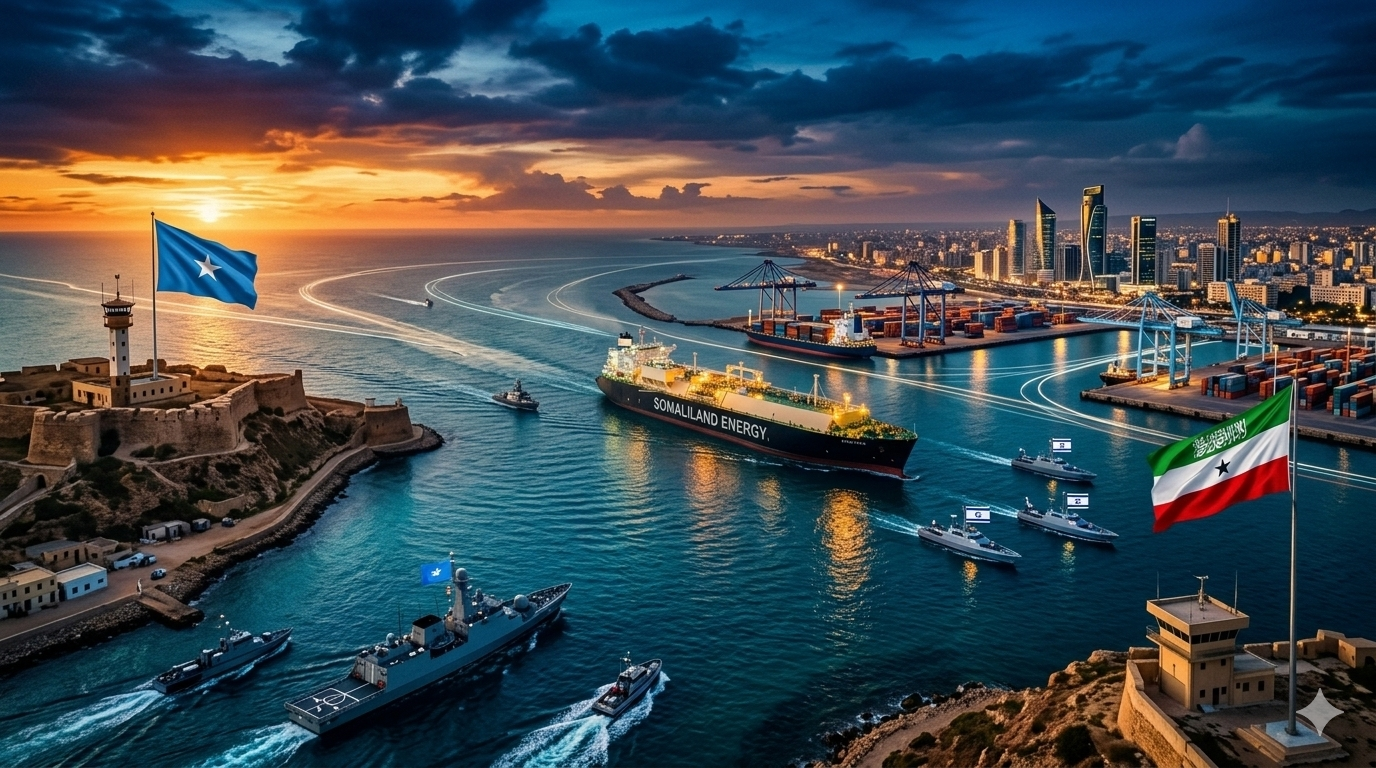
The Horn of Africa is witnessing rapid geopolitical developments that threaten to change the political map of the region, and the issue of the secession of "Somaliland" comes on top of these developments. Since the unilateral declaration of secession in 1991, the region has sought international recognition, which began to be achieved recently with Israel's declaration of recognition. The background to the crisis is the territory of "Somaliland", an estimated area of 137,600 square kilometers, located in the northwest of Somalia. The region was a former British colony, unlike the rest of Somalia, which was under Italian colonization, and it joined the state of Somalia after independence in 1960. With the collapse of the central state in Somalia in 1991, the region declared its secession and independence, and began to build independent state institutions, but without official international recognition until recently. Israeli recognition of "Somaliland" comes in the context of accelerated regional and international changes, and as part of an Israeli strategy to penetrate into the Horn of Africa, which is of great strategic importance for Arab national security. Geopolitically, this recognition gives Israel a new foothold in a vital area overlooking the entrance to the Red Sea and the Gulf of Aden. Economically, it opens the way for it to invest in mineral and energy resources in the territory. On the security level, it could constitute a new control point in a region that is witnessing increasing activity of armed groups. The most prominent repercussions on the Arab nation are the consecration of the principle of fragmenting Arab and Islamic countries into smaller entities, which weakens their bargaining position and increases their dependence on major powers. The Israeli presence in the Horn of Africa also threatens Arab national security, especially in Egypt and Sudan, and threatens the security of navigation in the Red Sea. On the economic level, this development can lead to an increase in Israeli influence in East African markets at the expense of Arab countries. Future scenarios Potential scenarios range from strengthening international recognition of Somaliland and the success of secession, or the failure of the separatist project and the return of negotiations with the central government, or the continuation of the status quo for a long time without a final solution. These scenarios depend on the success of Somali diplomacy in the face of the secessionist endeavor, and on the role that Arab and Islamic countries will play in supporting the unity of Somalia. Recommendations for Arab countries Intensifying political and economic support for the central government in Somalia. Activating the role of the League of Arab States and the Organization of Islamic Cooperation in countering the secessionist project. Developing a unified Arab strategy