
Country
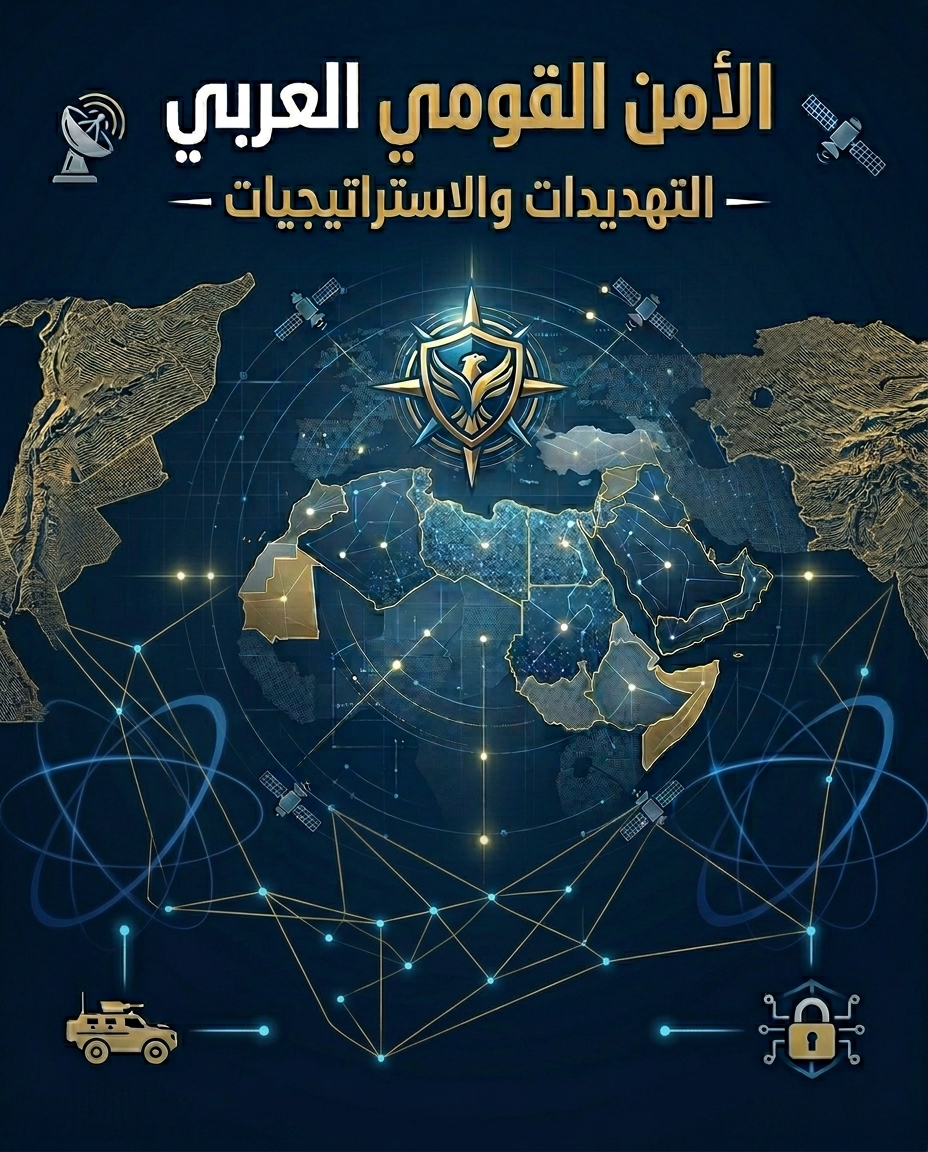
Arab National Security – Threats and Strategies
About this Study
Study Content
Introduction:
National security is a fundamental pillar for the survival and stability of states. In the Arab context, however, the concept goes beyond traditional dimensions to include a complex set of interconnected factors. Arab countries face multi-level challenges, ranging from military conflicts to economic pressures and social changes.
In this context, it is no longer possible to approach national security through a traditional lens based solely on military power. Instead, it requires a comprehensive vision that considers all elements of power and influence.
1. Concept of Arab National Security:
Arab national security represents a comprehensive framework aimed at protecting Arab states from various threats and ensuring their political, economic, and social stability.
• Political Dimension:
Focuses on maintaining political stability and preventing external interference in domestic affairs. It also includes the ability to make independent sovereign decisions, which is increasingly challenging amid growing regional and international influence.
• Military Dimension:
Concerns building effective defense capabilities to protect borders and deter threats. The challenge lies not only in possessing power, but in using it within an integrated strategy that prevents conflicts rather than escalating them.
• Economic Dimension:
Relates to ensuring resource stability and reducing external dependence, especially in critical areas such as food and energy. A weak economy makes a state more vulnerable to political pressure.
• Social Dimension:
Includes achieving internal cohesion and reducing social disparities, as internal divisions can become direct security threats, sometimes more dangerous than external ones.
2. Traditional Threats to National Security:
Traditional military threats still exist, although their nature has evolved.
• Direct Military Conflicts:
Some Arab regions experience ongoing or potential conflicts, threatening regional stability and draining human and economic resources.
• Border Disputes:
Certain border disagreements remain sources of tension, especially in resource-rich areas, and may escalate without effective diplomatic mechanisms.
• Arms Race:
Rising military spending without coordination leads to resource depletion and may increase the risk of escalation rather than deterrence.
3. Non-Traditional Threats:
These threats have become more complex and influential in the modern era.
• Terrorism and Armed Groups:
They pose direct threats to internal security, exploiting political and social crises and affecting investment and stability.
• Cyber Warfare:
With growing reliance on technology, digital infrastructure has become a target, potentially disrupting vital sectors such as energy and communications.
• Food and Water Security:
Scarcity of resources in some Arab countries increases vulnerability and may lead to future conflicts if not strategically addressed.
• Irregular Migration:
Creates economic and social pressures and can sometimes be used as a political leverage tool.
4. Regional and International Interventions:
External powers play a key role in shaping the region’s security environment.
• Direct Military Intervention:
Often complicates conflicts and prolongs crises.
• Political Influence:
Some states exert political or economic pressure, limiting the independence of Arab decision-making.
• International Alliances:
While important, they may restrict freedom of action if not based on balanced interests.
5. Internal Challenges:
These are among the most dangerous threats because they originate within the state.
• Weak State Institutions:
Reduce the ability to manage crises and create power vacuums.
• Social Divisions:
May lead to internal conflicts, especially without effective containment policies.
• Unemployment and Poverty:
Create conditions that can drive instability and foster extremism.
6. Strategies to Enhance National Security:
Addressing these challenges requires a comprehensive and integrated approach.
• Strengthening Arab Cooperation:
Joint action is crucial, including information sharing and security coordination.
• Developing Defense Capabilities:
Beyond arms acquisition, this includes building integrated systems based on technology, training, and strategic planning.
• Achieving Economic Integration:
Reduces external dependence and strengthens resilience against crises.
• Investing in Education and Technology:
Essential for building adaptable societies capable of facing modern threats such as cyber warfare.
7. Future Scenarios of Arab National Security:
• Scenario 1: Status Quo Continuation
Challenges persist without fundamental solutions, potentially worsening over time.
• Scenario 2: Gradual Improvement
Limited progress through partial cooperation and internal reforms—this is the most realistic in the short term.
• Scenario 3: Comprehensive Integration
Requires strong political will to build a collective security system—ambitious but difficult to achieve.
Conclusion:
Amid growing challenges, national security in the Arab world can no longer be addressed individually by each state. It has become a collective necessity requiring regional coordination and integration. The future of security in the region depends on the ability of Arab states to develop flexible and comprehensive strategies that can adapt to a rapidly changing world.