Country
Arab Media and the Shaping of Public Opinion
About this Study
Study Content
Introduction:
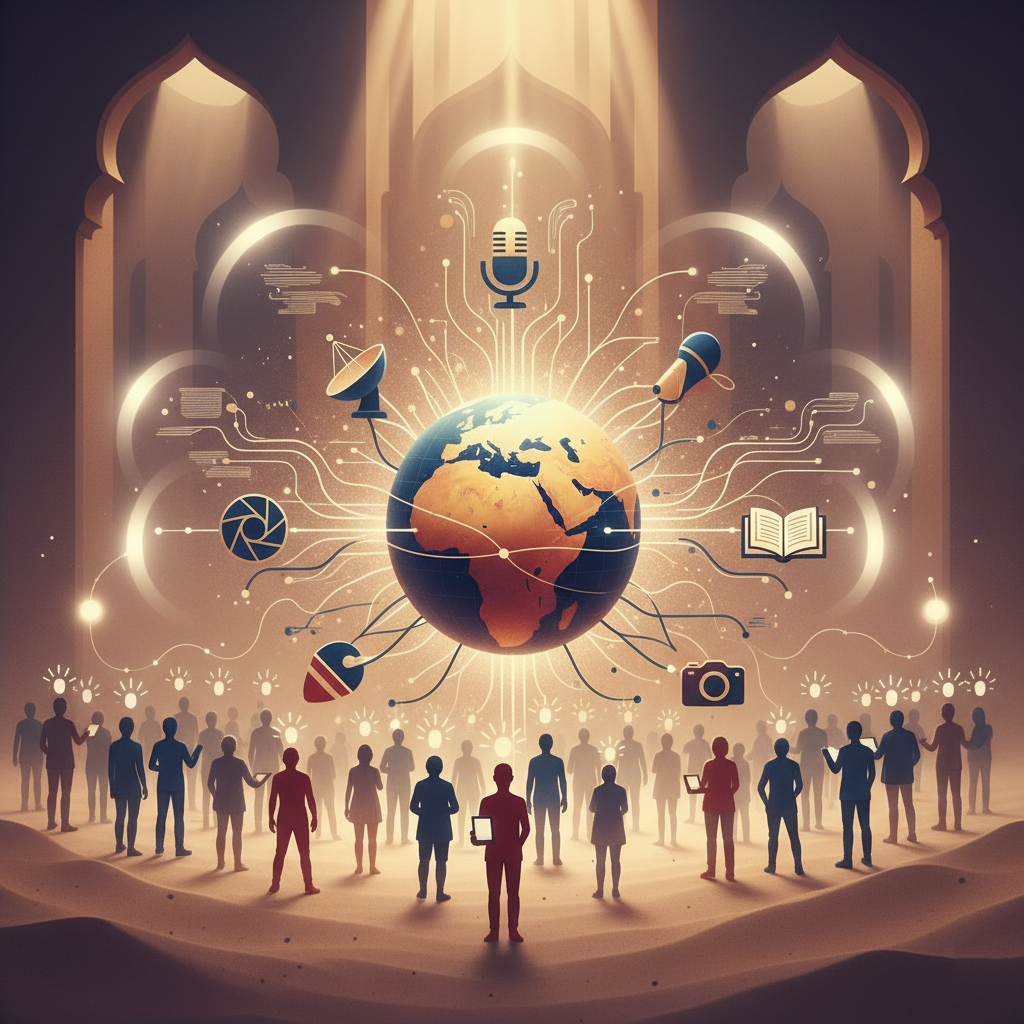
Media is considered one of the most influential tools in shaping modern societies. Its role is no longer limited to delivering news and information; it has become a central force in directing public opinion and shaping political, social, and cultural perceptions. In the Arab world, media has gained particular importance due to the political, economic, and social transformations the region has experienced over recent decades.
Arab media has gone through several stages, beginning with traditional newspapers, radio, and state television, and later evolving into satellite broadcasting, digital platforms, and social media. This transformation significantly changed the relationship between citizens and information. It also created a vast and open media environment while introducing challenges related to credibility, political influence, and the spread of misinformation.
Amid regional and international competition for influence, media has become a key arena of soft power, used by states and institutions to shape public awareness and influence political and social attitudes.
1. The Evolution of Arab Media:
Arab media has undergone major transformations throughout different historical periods, closely linked to political and technological developments in the region.
• Traditional Press Era:
The Arab press emerged as a tool for spreading news, political ideas, and cultural awareness. Newspapers played an important role in promoting Arab nationalism and resisting colonialism, while also contributing to the formation of intellectual and political elites.
• State-Controlled Media Era:
With the establishment of modern Arab states, radio and television became part of state institutions. Governments used official media to strengthen political discourse and promote national identity.
• Rise of Satellite Media:
The spread of Arab satellite channels broke the monopoly of state media and introduced a more diverse media environment, increasing competition among countries and media institutions.
• Digital Transformation:
The internet and social media fundamentally changed the nature of media. Individuals became active participants in producing and distributing content rather than being passive consumers.
2. Public Opinion and the Role of Media in Shaping It:
Public opinion refers to the dominant attitudes and ideas within society regarding a specific issue, and media is one of the most influential factors in shaping it.
• Guiding Public Debate:
Media has the ability to determine which issues dominate public discussion by focusing extensively on certain topics.
• Shaping Political Perceptions:
The way news and analysis are presented influences public attitudes toward governments and regional or international issues.
• Emotional and Psychological Influence:
Some media outlets rely on emotional narratives and impactful imagery to provoke public reactions, directly influencing collective mood.
• Creating Polarization:
In some cases, media contributes to social divisions by promoting biased or confrontational discourse.
3. Arab Media and Political Transformations:
Arab media has been closely connected to the political changes that have shaped the region.
• Media During Wars and Crises:
Media played a crucial role in covering conflicts and wars, but it often became a tool for political mobilization and propaganda.
• Media and Popular Movements:
Satellite channels and social media platforms helped broadcast protests and political events in real time, strengthening public mobilization.
• Relationship Between Media and Authority:
This relationship varies across Arab countries. Some governments maintain tight control over media narratives, while others allow broader margins of freedom.
4. Digital Media and Social Networks:
Digital platforms have radically transformed the Arab media landscape.
• Speed of Information Flow:
News now spreads instantly, increasing the speed at which public opinion is shaped.
• Decline of Traditional Gatekeepers:
Media institutions are no longer the sole source of information, as individuals and influencers have become key players.
• Spread of Misinformation:
The rapid circulation of content has contributed to the spread of rumors and unreliable information, creating credibility challenges.
• Rise of Interactive Culture:
Audiences have become more engaged in public discussions through comments, reactions, and interactive content.
5. Challenges Facing Arab Media:
Despite significant progress, Arab media continues to face several challenges.
• Credibility Issues:
Some institutions suffer from declining public trust due to political bias or lack of professionalism.
• Political and Economic Pressures:
Government influence and financial interests may affect the nature of media content.
• Digital Competition:
Traditional media institutions struggle to maintain audiences in the face of rapidly growing digital platforms.
• Weak Analytical Content:
Parts of the media focus more on speed and sensationalism than on deep analysis and informative content.
6. Media as a Tool of Soft Power:
States increasingly use media to strengthen their regional and international influence.
• Cultural Influence:
Media and entertainment productions help project a particular image of a country and its culture.
• Political Influence:
Media can support political agendas or pressure decision-makers toward specific policies.
• Regional Competition:
Some media organizations have become part of broader political rivalries among states.
7. The Future of Arab Media:
Arab media is moving toward greater digitalization and more direct audience interaction.
• Expansion of Digital Platforms:
Digital media is expected to continue growing at the expense of traditional outlets.
• Use of Artificial Intelligence:
Modern technologies are likely to play a larger role in content production and data analysis.
• Need for Greater Professionalism:
Credibility and quality will become decisive factors for the survival of media institutions.
• Growing Audience Influence:
Audiences will increasingly shape content production and public discourse.
Conclusion:
Arab media has become a major force in shaping public opinion and influencing political and social transformations across the region. With rapid technological advancements, media is no longer merely a tool for transmitting information but a powerful instrument in shaping awareness and directing public debate.
Despite challenges related to credibility, polarization, and political pressures, the future of Arab media will depend on its ability to adapt to the digital environment and provide professional, analytical content capable of gaining public trust and influence.